Last updated November 2026
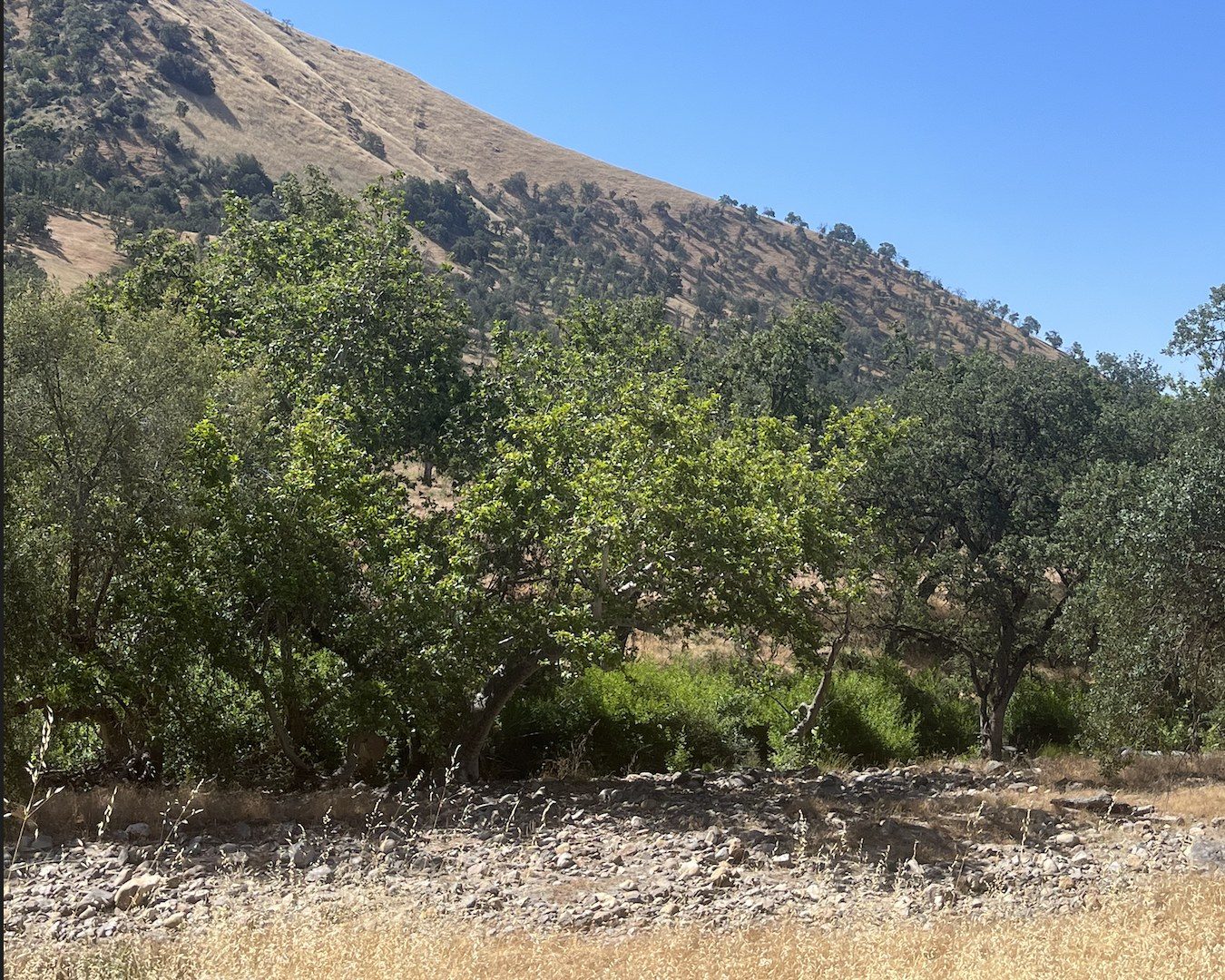
On rural property in San Luis Obispo County, a thin blue line on a topo map can decide where a septic system, house, ADU, or driveway can go. That holds even when the "creek" is a dry wash most of the year. It matters most when you're buying a home whose leach field is failing. This guide covers the state and County rules, how Atascadero and Paso Robles differ, and what to check before you write an offer.
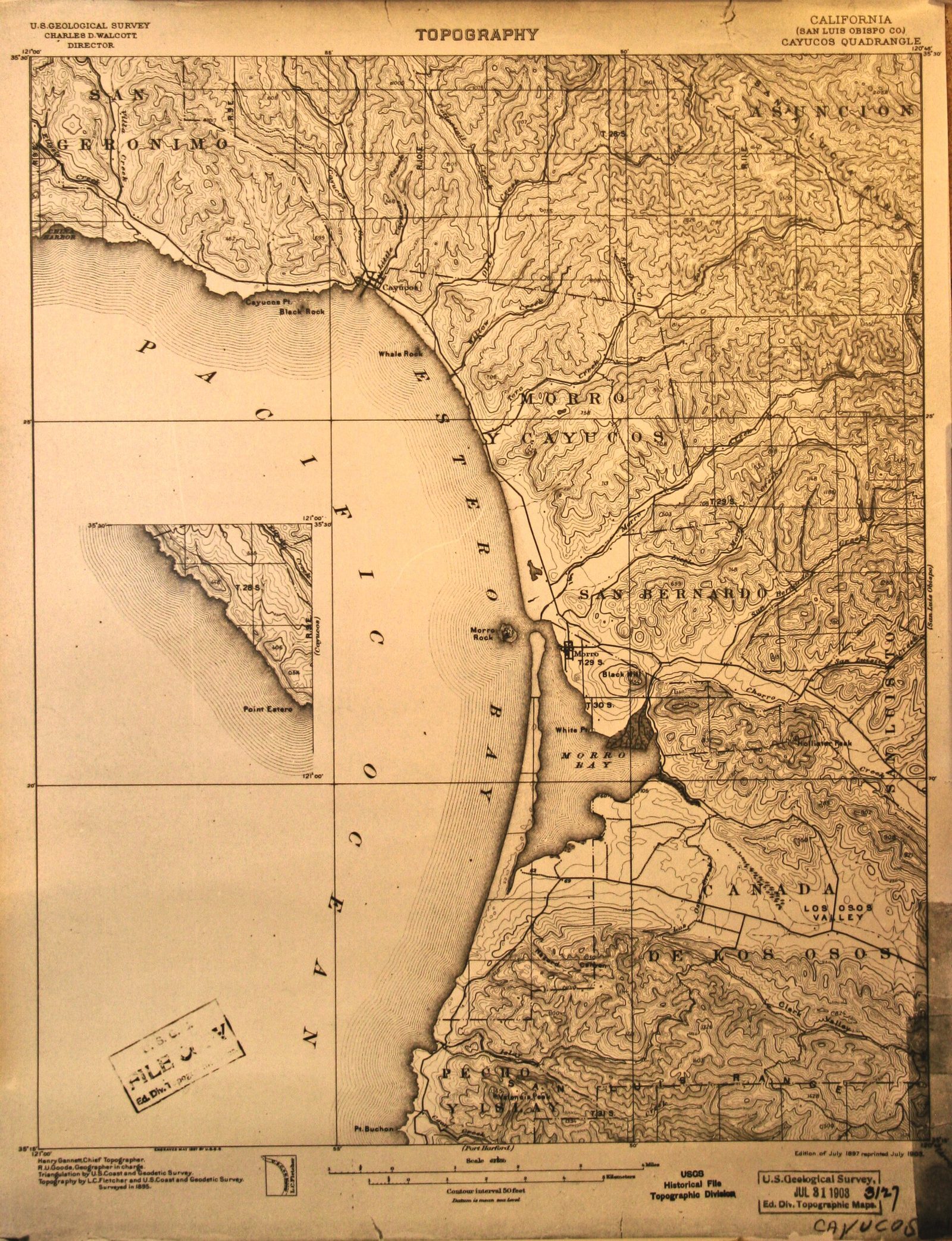
What is a blue-line creek?
USGS 7.5-minute topographic maps draw water in blue. A perennial stream is a solid blue line, and an intermittent stream is a blue dashed-and-dotted line (USGS US Topo Map Symbol Guide).
San Luis Obispo County builds this into its code. The inland Land Use Ordinance (Title 22, Ch. 22.80) defines "Stream/Creek, Blue Line" as any bed, channel, or bank shown with a blue line on a USGS 7.5-minute quad. It adds that the flow "could be perennial, intermittent, or ephemeral" (Title 22, Ch. 22.80).
Why a dry creek still counts. The State Water Board's septic rules (the OWTS Policy) define a "flowing water body" to include channels that are dry when you see them but that the geology shows flow when there is water, "such as in an ephemeral drainage, creek, stream, or river" (OWTS Policy, 2023). The County's septic program uses the same definition. California Department of Fish and Wildlife (CDFW) also says streams that are dry part of the year are covered (CDFW Lake and Streambed Alteration Program).
Who sets the septic rules?
- The state. The State Water Board's OWTS Policy (amended April 18, 2023; originally adopted June 19, 2012) sets default "Tier 1" standards. A local septic program (a LAMP) replaces Tier 1 once the Regional Water Board approves it.
- Unincorporated SLO County. The Central Coast Water Board approved the County's LAMP on September 25, 2020 (Resolution R3-2020-0024). County Planning & Building issues septic permits (County LAMP, rev. July 30, 2020.
- Inside city limits, different rules. The County LAMP and Title 22 apply only in unincorporated areas. Atascadero has its own LAMP, approved December 7, 2018 (Atascadero LAMP). Paso Robles has no LAMP on the Water Board's list (Central Coast Water Board LAMP list) and handles septic through its sewer ordinance.
Setback comparison: state, County, Atascadero, Paso Robles
| Septic setback | State Tier 1 | SLO County (LAMP) | Atascadero (LAMP) | Paso Robles |
|---|---|---|---|---|
| Creek, stream, spring | 100 ft | 100 ft from top of bank | 100 ft (seepage pit 150 ft) | Septic only when sewer is unavailable; no city-specific number found |
| Drainage course | Covered by stream rule | 50 ft (leach lines, seepage pits) | Not separately listed | , |
| Lake, pond, wetland | 200 ft | 200 ft from spillway | 200 ft | , |
| Private well | 100 ft | 100 ft (seepage pit 150 ft) | 100 ft (seepage pit 150 ft) | , |
| Public well | 150 ft (200 ft if dispersal is deeper than 10 ft) | 150 ft (200 ft if deeper than 10 ft) | 150 ft (200 ft if deeper than 10 ft) | , |
| Salinas River | , | 150 ft from top of bank | 100 ft (general creek rule) | , |
Sources: OWTS Policy §7.5; County LAMP Table 5 and §2.D.8; Atascadero LAMP Appendix F; Paso Robles Ch. 14.08.
Other County septic rules to know:
- Leach lines need 8 ft from structures, 5 ft from property lines, and 25 ft from the top of a slope (100 ft at an eroded bank or a slope over 60%; engineering can cut that to 50 ft).
- Groundwater separation: at least 5 ft for a conventional system, 2 ft with supplemental treatment, and more in fast soils. The LAMP notes swings of 20+ ft in Santa Margarita and Garden Farms.
- Reserve area: every new design must show a 100% reserve area for a future replacement field.
- ADUs: under 800 sq ft may use or modify the existing system; 800–1,200 sq ft needs a new system with its own reserve area.
Building and grading near blue-line creeks (unincorporated County)
- Drainage plan: required for grading or structures within 100 ft of the top bank of a blue-line creek (Title 22, §22.52.110).
- Erosion control plan: required for clearing half an acre or more of native vegetation within 100 ft of a USGS-mapped watercourse (§22.52.120).
- Working in the channel: needs a County drainage plan and a CDFW streambed alteration permit (§22.52.150; Fish & Game Code §1602).
- Riparian setbacks, mainly for discretionary projects or certain areas: 30 ft from top of bank under the Agriculture Element (AGP 26), 50 ft in El Pomar-Estrella (§22.94.040), 100 ft from top of bank, wetlands, and riparian habitat at a mapped Commercial Service site at West Centre and Highway 46 in Shandon (§22.94.090), and 50 ft urban or 100 ft rural from the upland edge of riparian vegetation in the coastal zone (§23.07.174).
- Flood Hazard areas: lowest floor at least 1 ft above base flood elevation, and septic placed outside the flood area where feasible (§22.14.060).
In Atascadero, city code treats land within 100 ft of the Salinas River, and within 20 ft of other creeks (measured from top of bank), as a "watercourse-adjacent area." Only listed minor improvements are allowed there (Atascadero Municipal Code §§9-4.171–9-4.175, current as of the December 10, 2024 amendment). In Paso Robles, I didn't find a numeric creek setback in the zoning code or the Conservation Element, so check with the city.
If the leach field is failing: why setbacks suddenly matter
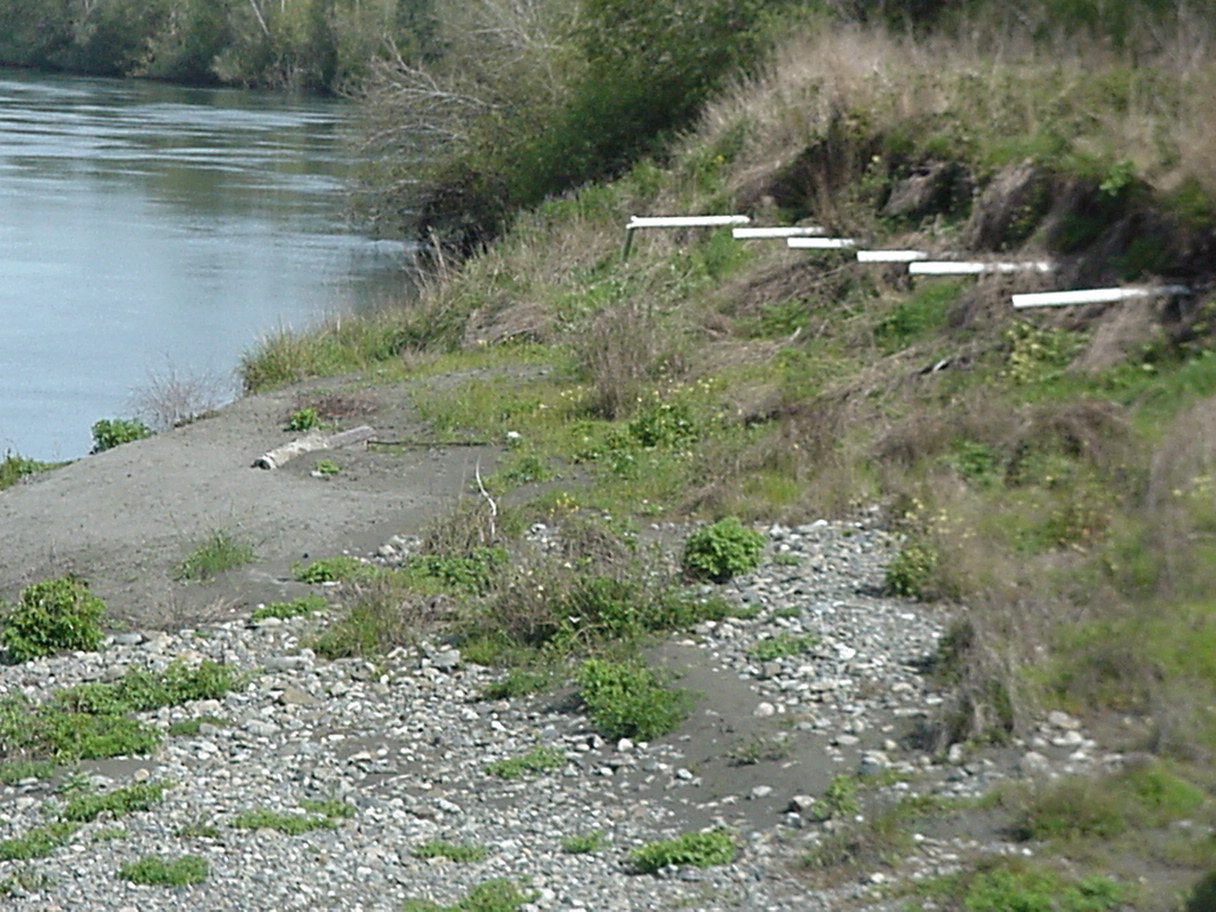
An older septic system that works is generally left alone. The County LAMP says functioning systems aren't affected "for as long as they continue to function properly." Once it fails, the replacement has to meet today's rules. The site may look nothing like it did when the original system went in.
What counts as failure. Under the County LAMP, it's pooling or surfacing effluent, or sewage backing up into the house; a tank fails when a baffle or structural failure lets wastewater out or groundwater in. Atascadero also counts odor that draws formal complaints, where the system can't be fixed within 30 days.
What happens next (County). The County investigates within 24 hours of a report. A Notice of Violation requires pumping, then a permitted repair, generally within 30 days of an overflow notice.
How close is close enough. State policy (§9.4.11) lets a replacement that can't meet public-well and water-intake setbacks meet them "to the greatest extent practicable," with supplemental treatment. The County lets repairs come close "to the greatest extent practicable" too, but may require supplemental treatment. It can't approve less than 2 ft of groundwater separation; that goes to the Water Board.
The hurdles to finding room for a new field:
- A new perc test. The County requires one for any leach-field repair or replacement, and the approval is good for one year.
- The reserve area. Newer permits show a 100% reserve, but many older ones never tested one. Atascadero requires proof one will work if it wasn't tested, even if old plans show where it goes.
- Creeks and drainages: 100 ft from a creek's top of bank and 50 ft from a drainage course.
- Wells, including the neighbors'. The County site plan must show every well within 300 ft.
- What's been built since. Pools, decks, driveways, and additions often cover the only open ground.
- Slopes and groundwater. Steep or eroded banks and shallow groundwater can rule out what's left.
- Small lots. On existing County parcels under 2 acres, a conventional system needs 25 ft to seasonal groundwater, 5–120 mpi perc, and under 10% slope; otherwise it needs supplemental treatment. Atascadero's LAMP notes that many older systems sit on lots under ½ acre, where repairs are "very challenging."
Engineered systems come with strings. A County non-conventional system needs an operating permit with annual reports, an O&M manual, and a recorded Operations & Maintenance Agreement that binds future owners. A new owner must update the operating permit within 60 days of the transfer.
A title trap. A County owner who declares financial hardship can record a deed declaration that a repair doesn't meet code. A conforming engineered system is then required at property transfer.
Costs. FY 2026–27 County permit fees, with the 9.74% surcharge, are $768.18 for a major repair, $1,349.80 for a new conventional system, and $2,206.87 for a new engineered residential system (fee schedule). Construction costs aren't published; the LAMP notes the "increased costs of newer systems that depend on supplemental treatment" without numbers, so get local bids.
Takeaways
For buyers
- Check whether the parcel is inside a city or unincorporated; the rules differ.
- Pull the current USGS quad. Treat a dry wash on a blue line as a creek.
- Order a septic inspection with pumping, and ask for pumping records.
- Get the permit, layout, perc data, and as-builts from the County (or city), and confirm a tested reserve area with nothing built on it.
- Search title for a hardship declaration or an engineered-system agreement.
- Make the deal contingent on the inspection and, if the system is old or failing, on a professional's replacement-feasibility opinion.
For sellers
- Map the tank, leach field, and well against creeks, and gather permits and pumping records.
- Disclose known failures, creek crossings, culverts, or bank work.
- A current perc test (good for one year) helps on raw land.
For agents
- Don't market a building site or ADU potential until setbacks are checked.
- Flag Flood Hazard, coastal zone, and planning-area rules early.
FAQ
Does a dry creek count for septic setbacks?
Yes. State and County rules define flowing water bodies to include ephemeral drainages, and SLO County's code defines blue-line streams to include ephemeral flow.
How far must a leach field be from a creek in SLO County?
In unincorporated areas, 100 ft from the creek's top of bank, and 50 ft from a lesser drainage course, under the County LAMP.
Do County septic rules apply in Atascadero or Paso Robles?
No. Atascadero has its own LAMP with similar septic setbacks. Paso Robles requires sewer connection unless the City Council permits septic where sewer isn't reasonably available.
What happens if the septic system fails on a house I'm buying?
The replacement generally has to meet current rules, or come as close as practicable with supplemental treatment. A new percolation test is required, and the result can be an engineered system with an annual operating permit.
Sources
- State Water Board OWTS Policy (2023)
- [SLO County LAMP (rev. July 30, 2020)](https://www.slocounty.ca.gov/departments/planning-building/forms-documents/septic-system-(onsite-wastewater-treatment-systems/county-of-san-luis-obispo-lamp-2020)
- Central Coast Water Board, approved LAMPs
- SLO County Code Title 22, Ch. 22.52 Grading and Drainage
- SLO County Agriculture Element (AGP 26)
- SLO County Planning & Building Fee Schedule FY 2026–27
- City of Atascadero LAMP and Appendices
- Atascadero Municipal Code Title 9, Ch. 4 (ecode360, official)
- Paso Robles Municipal Code Ch. 14.08
- CDFW Lake and Streambed Alteration Program
- USGS US Topo Map Symbol Guide
About the author: Mark Hazell is a Broker Associate with Home & Ranch Sotheby's International Realty in Templeton, CA (DRE# 01831517). Mark studied Agricultural Business at Cal Poly and works with buyers and sellers of acreage, ranch, vineyard, and country properties across San Luis Obispo County.
This article is general information, not legal or engineering advice. Setbacks are site-specific. Confirm parcel-specific rules with SLO County Planning & Building, or with the City of Atascadero or City of Paso Robles inside city limits, and a qualified septic professional. County and city codes can change; check the official code before relying on a section number.